

Why Do Some Well-Structured Essays Still Feel Weak?
Students can follow a clear structure and still produce ineffective writing.
The reality is that structure alone is not sufficient. Students must understand the purpose of their writing. This is where the four main genres become essential.
What Are the Four Main Genres of Writing?
There are four primary ways we communicate through writing:
- Expository (Teach It!) – Explain and inform.
- Persuasive/Argument (Prove It!) – Convince the reader.
- Narrative (Tell It!) – Relate events. Tell what happened.
- Descriptive (Describe It!) – Create vivid images.
In most cases, when students write, they are engaging in one or more of these four forms of communication.
A Note for Teachers: The Four Modes of Discourse
These four categories were originally referred to as the four modes of discourse, a concept that dates back to the 19th century and was popularized by Alexander Bain in 1866.
While the term “modes of discourse” remains accurate, it can be abstract for many students.
For instructional purposes, referring to them as the four main genres makes the concept more accessible and easier to apply in the classroom.
Important: Writing Is Usually “Primarily” One Genre
Most writing is not purely one type. It’s:
- Primarily expository
- Primarily persuasive
- Primarily narrative
- Primarily descriptive
With elements of the other genres included as needed. It is often helpful to think in terms of overlap rather than rigid categories.
For example:
- A persuasive essay may include a brief narrative example
- An expository piece may include descriptive details
Effective writing often blends genres, but typically maintains one primary purpose.
Example: Mixed Genres in Action
Primarily Argument with Narrative and Description
Many communities should do more to protect local wildlife habitats (Argument), especially as development continues to reduce natural spaces. Last spring, a small group of volunteers gathered near a once-quiet creek where deer used to roam freely (Narrative). The water, now cloudy and littered with debris, moved slowly past broken branches and patches of dry earth (Description). This visible decline shows that without active efforts to preserve these environments, both animals and ecosystems will continue to suffer (Argument).
Narrative Story with a Strong Argument
As the sun rose over the forest, a young fox cautiously stepped out from behind a fallen log, sniffing the cool morning air (Description). Just days earlier, loud machines had torn through part of its home, leaving behind noise, dust, and unfamiliar emptiness (Narrative). The fox paused, unsure where to go next (Narrative). Experiences like this illustrate why protecting natural habitats is essential—not just for the environment, but for the survival of the animals that depend on it (Argument).
New to the Tell Them Model?
If you are not familiar with the foundational structure behind much of academic writing:
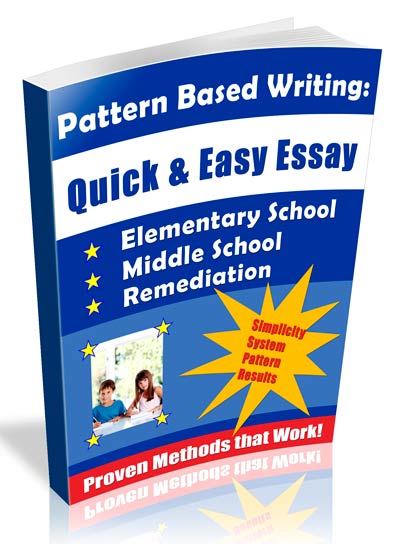
Start here: Pattern Based Writing: Quick & Easy Essay
A clear understanding of that model will make the concepts below easier to teach and apply.
When the Tell Them Model Works (and Doesn’t)
1. Expository Writing: A Strong Fit
Expository writing focuses on explaining, informing, and teaching. This is where the Tell Them Model is most effective.
Readers expect clarity, logical organization, and efficient communication. In academic contexts, writers are expected to clearly preview what will be covered and organize ideas in a logical sequence.
In this context, the Tell Them Model provides an appropriate and effective structure.
2. Persuasive Writing: It Depends on the Audience
Persuasive writing introduces an important variable: the reader may not agree with the writer. Hence, we have 1) the Friendly Audience and 2) the Hostile Audience.
Friendly Audience
- Open to the ideas presented
- Willing to consider the argument
The Tell Them Model can be effective.
Hostile Audience
- Resistant to the ideas presented
- Likely to disagree from the outset
Leading with a direct statement of the argument may be ineffective.
Example: Hostile Audience in Persuasive Writing
Direct “Tell Them” Approach:
A school should only serve healthy food to students. Junk food should be completely removed from all school menus because it is harmful and unnecessary.
Likely reaction:
“I’m not going to read this. That’s outrageous.”
Indirect, Strategic Approach:
Most people want to live long, healthy lives free from disease and serious health problems. Good nutrition plays an important role in achieving that goal, especially during childhood and adolescence.
Instructional Point:
When addressing a resistant audience, it is often ineffective to begin by stating a position that the audience is not ready to accept.
- Begin with shared values
- Build agreement gradually
- Introduce more challenging ideas after establishing common ground
In many cases, writers cannot begin by telling readers what they do not want to hear.
3. Narrative Writing: Generally Not Compatible
Narrative writing focuses on events, sequence, and experience.
A key element is suspense. If the outcome is revealed at the beginning, the impact of the narrative is reduced.
Important Distinction
- Narrative stories rely on suspense
- Informational narratives may overlap with expository writing
In storytelling, it is generally best to avoid revealing key outcomes too early.
Example: When “Tell Them” Ruins Narrative
(Imagine if you told them! It would ruin the story!)
The miner was about to strike a massive gold nugget that would make him rich beyond his wildest dreams. (Told Them) With every swing of his pickaxe, he chipped away at the stubborn rock, his arms aching and his hopes fading with each dull strike. The river rushed beside him, cold and relentless, as if urging him to give up. Then—at last—his pick hit something solid.
Example: Informational Narrative (Works with Tell Them)
Benjamin Franklin demonstrated that lightning is a form of electricity by flying a kite during a storm (Told Them). As dark clouds gathered overhead, he carefully launched his kite into the sky, attaching a metal key to the string. When the storm intensified, the key began to spark, proving that electricity was present in the lightning.
Instructional Point
In narrative storytelling, revealing the outcome too early removes suspense and weakens the impact of the story.
In informational narratives, however, clearly telling the main idea upfront can improve clarity and help the reader follow the information.
4. Descriptive Writing: A Different Approach
Descriptive writing focuses on creating a clear image in the reader’s mind.
Its purpose is to engage the senses and create an experience.
Key Teaching Point
Descriptive writing is most effective when it emphasizes showing rather than telling.
When description is reduced to simple statements, the writing loses impact.
Example: How “Telling” Ruins Description
(Telling First — Weakens Description)
The baby kitten was cute and adorable. Its oversized ears stuck out from the sides of its head, and its whiskers twitched constantly. One paw lifted slightly off the ground as if it wasn’t quite sure what to do with it, and its tiny nose wrinkled every few seconds.
(Showing Without Telling — Stronger Description)
The snow-white kitten created such joy for the onlookers. The tiny kitten with oversized ears sticking out to the sides of its head sat with one paw slightly lifted, as if unsure where to place it. Its whiskers twitched again and again, and its small pink nose wrinkled every few seconds. Its wide eyes seemed just a little too big for its face, giving it a permanently curious, slightly puzzled look.
Instructional Point
When writers begin by telling the reader what to think (e.g., “cute” or “adorable”), they weaken the impact of the description.
Strong descriptive writing allows the details themselves to create the impression.
When Should You Not Use the Tell Them Model?
- Narrative writing, where suspense is essential
- Descriptive writing, where imagery is the focus
- Persuasive writing directed at a resistant audience
The Big Mistake in Writing Instruction
Students are often taught a single structure:
Tell Them, Tell Them, Tell Them
However, they are not always taught when this structure is appropriate or when it should be adjusted.
Teach Thinking, Not Just Structure
Strong writing requires more than structural knowledge.
- Critical thinking
- Logical reasoning
- Precise use of language
Why Formulaic Writing Alone Is Not Enough
There is a significant risk in teaching writing as a set of formulas without also teaching logical thinking.
- Students may follow structure
- But fail to develop meaningful ideas
- Or communicate with clarity and purpose
Writing may be structurally correct—but intellectually underdeveloped.
A Well-Documented Concern
Effective writing instruction must go beyond structure.
Research and organizations such as the National Writing Project and the Carnegie Corporation of New York emphasize the importance of integrating critical thinking, reasoning, and idea development into writing instruction.
Example: Formula Without Thinking
Schools should require uniforms for three reasons. First, uniforms look nice. Second, they make students equal. Third, they are easy to wear.
This response follows structure but lacks depth and reasoning.
Example: Structure Combined with Thinking
Schools should consider requiring uniforms because they can reduce visible economic differences, simplify routines, and support a more focused academic environment.
This response demonstrates stronger reasoning and idea development.
Instructional Point
Formulaic writing is a starting point—not the goal.
- Structure organizes ideas
- Vocabulary expresses ideas
- Thinking gives ideas value
Build Stronger Thinkers and Writers
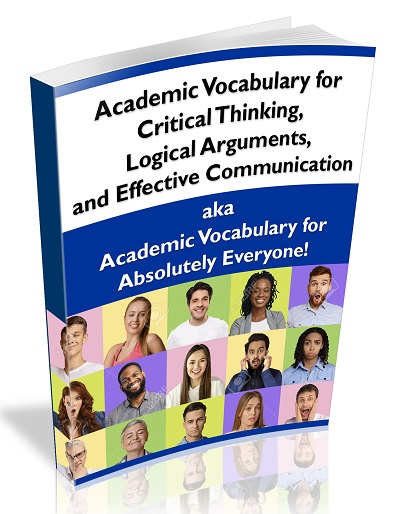
Academic Vocabulary for Critical Thinking, Logical Arguments, and Effective Communication
This program helps students develop clear thinking, strong arguments, and precise communication.
Final Takeaway
The Tell Them Model is highly effective—but not universal. Effective writers consider:
- Purpose
- Audience
- Genre
They then choose the structure that best supports their goals. Teach structure, but do not stop there. Students must also learn how to think, reason, and communicate with purpose.