

Strong writing skills begin with understanding one key idea: great writing is shaped by decisions.
Strong writing is not an accident. It is the result of decisions—decisions about what to include, what to emphasize, how much space to devote to ideas, and how to guide a reader from beginning to end. At both the paragraph level and the whole composition level, writers are constantly shaping meaning through structure.
Want a clear, proven system for teaching writing—without confusion or overwhelm?
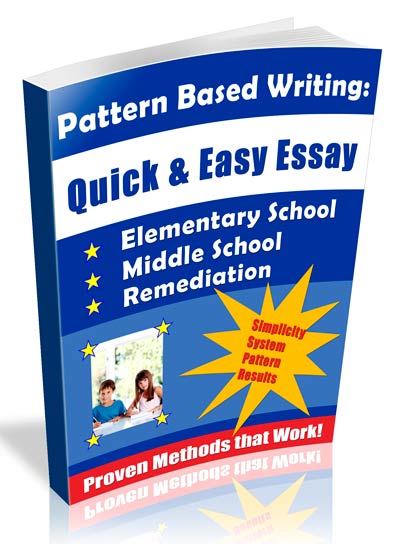
Pattern Based Writing: Quick & Easy Essay is the fastest, most effective way to teach clear, organized paragraph and multi-paragraph writing—guaranteed.
This article focuses on five essential concepts that determine the quality of writing:
- Emphasis
- Elaboration
- Selection
- Proportion
- Variety
Together, these concepts form a practical framework for creating clear, coherent, and effective writing. Put simply, strong writing happens when writers make good decisions—and when readers can easily recognize those decisions.
Emphasis
In effective writing, emphasis helps readers quickly identify what is most important.
Emphasis lets a reader determine what is most important in a paragraph. A topic sentence in the first position and a concluding sentence in the final position clearly emphasize what is most important. The first position and the last position in a paragraph contain built-in emphasis.
Furthermore, paragraph structure, textual cues, and a hierarchy of ideas all create emphasis. Major details directly support the main idea, while minor details support or clarify those major details. Textual cues—such as transitions, repetition, and parallel structure—signal importance and guide the reader’s attention.
Put simply, writers must make sure that readers are able to discern what is most important. That is, the writer must emphasize what is most important.
Positions of Emphasis
Writing theorists long ago identified two positions as most emphatic:
- The beginning
- The ending
Modern psychology confirms this through the primacy and recency effects: people tend to remember what comes first and what comes last. As a result, writers should place the most important information at the beginning and ending of sentences, paragraphs, and whole compositions.
The Goal and Purpose of Emphasis
The goal of emphasis is to make what is most important stand out. We can think about emphasis by asking three questions:
- Where is it located?
- How is it constructed?
- How much space is devoted to it?
The purpose of emphasis in expository writing is to function as a highlighter for the reader. In effective writing, important ideas are clearly marked—through position, structure, and cues—so the reader does not have to search for them.
Emphasis and the Sentence
The concept of emphasis applies equally to the sentence. One clear example is active voice:
- Active: Sue hit the ball over the fence.
- Passive: The ball was hit over the fence by Sue.
- Passive (no actor): The ball was hit over the fence.
Active voice emphasizes the actor and creates clarity. It places the person doing the action at the front of the sentence, where emphasis is strongest.
Elaboration in Paragraphs
We elaborate when we add more detail to main ideas, major details, or even minor details. A writer may touch on an important idea but not say enough to communicate what is needed.
Elaboration can take many forms:
- Clarification
- Commentary
- Explanation
- Description
We could consider important support or evidence to be elaboration, but elaboration usually connotes an improvement or refinement. Important support or evidence is essential; elaboration enhances and deepens that support.
In short, elaboration ensures that ideas are not only introduced but fully developed.
Students often struggle with elaboration because they lack a clear structure.
Pattern Based Writing: Quick & Easy Essay provides a step-by-step system that makes adding details clear, logical, easy, and effective.
Selection in Paragraphs
Selection matters at the paragraph level because a paragraph is only as strong as the details it includes. Writers must choose what stays and what goes.
This is where the Quadrant of Important and Interesting Ideas becomes useful:
- Important and interesting
- Important but not interesting
- Not important but interesting
- Not important and not interesting
The best paragraphs rely on ideas that are both important and interesting. Weaker paragraphs drift toward ideas that are interesting but not important—or not important at all.
Not every good detail belongs. A fact may be interesting, but if it does not support the main idea, it distracts. A detail that is important but not interesting may still belong, but it often requires clearer explanation.
The writing process is where this sorting happens. Writers keep what strengthens the point and cut what weakens it.
Proportion in Paragraphs
Proportion is a comparison of each part with the other parts, along with a comparison of each part to the whole. We want good proportions. We want each part of a paragraph to cover the proper amount of space—the amount of space that the ideas merit or deserve.
Using the quadrant:
- Most space → important and interesting ideas
- Some space → important but less interesting or interesting but less important
- No space → not important and not interesting
Writers sometimes begin a paragraph in quadrant #1 but do not know how to end it. As a result, they drift into quadrant #4 and produce off-topic, stream-of-consciousness writing. These are poor proportions.
Good writing maintains control over space. The most important ideas receive the most attention.
Selection in Whole Compositions
Selection at the whole composition level determines what the writing is really about. Before building paragraphs, writers must decide which ideas are worth developing.
Again, the quadrant applies. The strongest compositions are built on ideas that are both important and interesting. The other quadrants weaken the overall direction.
Not every interesting idea is worth including, and not every important idea will hold attention. Writers must choose carefully because those choices shape everything that follows.
Selection in whole compositions is like steering a large ship through a narrow, winding passage. It requires careful control. Early drafts explore, but revision narrows. In the end, a composition reflects not just what a writer knows, but what a writer decides is worth saying.
Many struggling writers include too much—or the wrong ideas.
Pattern Based Writing: Quick & Easy Essay helps students focus on what matters most so their writing becomes clear and effective.
Paragraph Length and Writing Style
What is the proper length of a paragraph? The answer is not found in a single rule, but in the collective practice of writers across time.
To provide an arbitrary answer is to ignore the rhetorical heptagon:
- Author
- Audience
- Topic
- Genre
- Purpose
- Message
- Occasion and circumstances
Paragraph length is a rhetorical decision. Writers make choices, and readers determine whether those choices are effective.
In academic writing, many of these factors are implied by the assignment. However, even in high-scoring papers, paragraph lengths vary. This variation is not an error—it is writing style.
Writers should ask:
- How can I improve my paragraph-length style?
- How can I adapt it to a specific situation?
Paragraph length is not fixed. It is flexible, purposeful, and shaped by context.
Paragraph Variety in Whole Compositions
Variety is a natural outcome of meaningful writing. When writers focus on what is important and interesting, variation emerges.
Two Types of Paragraph Variety
1. Variety in Paragraph Length
Paragraph length varies because not all ideas require the same amount of support. Some ideas are quickly understood; others require extended explanation.
2. Variety in Paragraph Type
Different paragraph types ask and answer different questions. One answer often leads to a new and different question. This is how writers fully explain a subject.
Formulaic Writing and Its Limits
Formulaic writing often reduces paragraph variety. For example, the five-paragraph essay asks and answers the same question multiple times:
- What is one reason?
- What is another reason?
- What is a final reason?
Because the questions do not vary, the paragraph types do not vary—and the lengths often do not vary either.
The five-paragraph essay is a useful teaching tool. However, if writers rely on only one structure, the result is predictable and limited writing.
Growth occurs when writers move beyond formula and begin making independent decisions.
Emphasis in Whole Compositions
Emphasis is part of the broader model of unity, coherence, and emphasis. Many common writing strategies exist primarily to create emphasis:
- Topic sentences
- Concluding sentences
- Thesis placement
- Transitions
These strategies help organize writing and make important ideas clear. Emphasis and coherence are closely connected. When important ideas are emphasized, they are easier to understand.
Proportion in Whole Compositions
Proportion at the composition level involves two key considerations:
1. Importance-Based Proportion
Writers should devote more space to what is important and less space to what is not.
2. Balance Between Parts and Whole
Writers must divide a topic reasonably while still addressing it as a complete whole.
Proportion is difficult because it relies on judgment. There are few fixed rules. As a result, it is often overlooked in instruction.
However, proportion becomes essential when constraints are removed. On a blank page, every idea competes for space. Some ideas demand too much attention; others contribute too little. The writer must control this balance.
Stories provide a clear example. A beginning, middle, and ending must all be present—but their proportions matter. Modern writing often defines these proportions precisely, sometimes in percentages.
Proportion is not just structure. It is control over emphasis, space, and balance.
Free Writing Resources
Looking for more support?
On the homepage, you’ll find over a dozen free PDF resources representing hundreds of pages of writing instruction. These resources expand on the ideas in this article and provide clear examples, explanations, and teaching support.
These free materials are designed to help you get started. The complete system goes much further.
Explore the free resources here
Conclusion
Great writing is shaped by decisions. At every level—from sentence to paragraph to full composition—writers must decide what to emphasize, what to include, how much to develop, and how to structure ideas.
Emphasis highlights what matters. Elaboration deepens understanding. Selection creates focus. Proportion controls balance. Variety brings writing to life.
These are not rigid rules. They are tools for thinking.
In the end, effective writing is not defined by formulas or templates. It is defined by a writer’s ability to make purposeful decisions—and to guide the reader clearly through those decisions.
If you want a complete, proven system for teaching writing:
- Pattern Based Writing: Quick & Easy Essay — Best for elementary, middle school, remedial, and struggling writers
- Academic Vocabulary for Absolutely Everyone — Best for anyone who wants to improve critical thinking, logical arguments, and effective communication