

Want Students to Write Clear Essays—Fast?
Most students struggle with writing for one simple reason: They don’t understand structure. Give them the right structure, however, and everything changes—quickly.
That’s where the Tell Them Model comes in. It’s simple, powerful, and—when taught correctly—transformational.
What Is the Tell Them Model in Writing?
The Tell Them Model is a writing structure where the introduction previews the main points, the body explains them, and the conclusion summarizes them. It helps students write clear, organized essays.
In short:
- Tell them what you are going to tell them.
- Tell them.
- Finally, tell them what you told them.
Why This Model Works So Well
- The introduction previews what’s coming
- The body delivers the content
- The conclusion reinforces the message
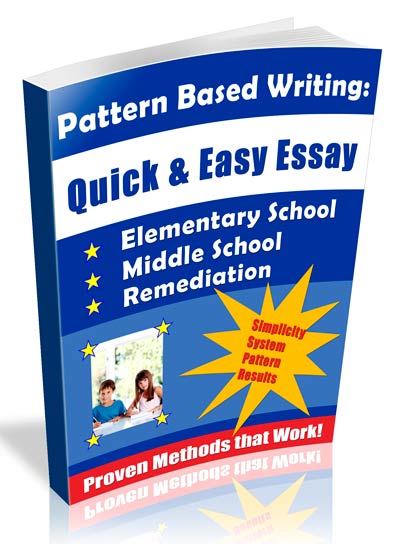
The conclusion connects it all and brings the writing full circle. In Pattern Based Writing: Quick & Easy Essay, I call this ROC-It! (Repeat or Connect). It’s a simple and highly effective strategy and technique to help students connect endings back to beginnings and bring their writing full circle to effectively conclude.
The Backbone of the Five-Paragraph Essay
Have you ever taught any of these?
- Five-paragraph essays
- Hamburger paragraphs
- Sandwich essays
If so, then you’ve already taught the Tell Them Model. Put simply, the TELL THEM MODEL is the organizational backbone of expository writing and much of persuasive writing.
The Real Challenge: Introductions That Actually Work
The middle is easy—students can usually “tell them.” But introductions? That’s where many struggle or simply fail.
In short, how do you preview what’s coming—and still make the reader want to keep reading?
Two Powerful Types of Introductions
1. The Blatant “Tell Them” Introduction
- Clear and direct
- Outlines the essay
- Ideal for academic writing
2. The Attention-Grabbing Tell Them Introduction
- Builds curiosity
- Hints at what’s coming
- Increases engagement
Best practice: Teach both. Start with clarity, then build creativity.
Example Topic: Why School Is Fun
1. The Blatant “Tell Them” Introduction (Outline Style)
School can be a fun and exciting place for many reasons. In this essay, I will explain why school is fun by looking at three main ideas: learning new and interesting things, spending time with friends, and participating in enjoyable activities.
2. The Attention-Grabbing Tell Them Introduction
The bell rings, and instead of feeling bored, you feel excited. Why? Because school is not just about sitting at a desk—it’s a place where you discover new ideas, laugh with friends, and take part in activities you actually enjoy.
“Tell Them” Is Everywhere
Have you ever noticed any of these when reading a book, magazine, blog, or newspaper?
- Titles and subtitles
- Headings and subheadings
- Topic sentences
- Thesis statements
All of these help readers preview, navigate, and understand writing. In short, these structures all TELL!
The Tell Them Model is not just for essays—it’s built into almost every form of communication. Titles, headings, topic sentences, and even book covers all “tell” the reader what’s coming next.
This helps readers quickly understand, navigate, and decide if they want to keep reading. Strong writers use these elements intentionally to guide their audience and create interest before the reader even reaches the main content.
Teach This Faster and Better
If your goal is to help students quickly master:
- Paragraph structure
- Essay organization
- Clear thinking
Pattern Based Writing: Quick & Easy Essay is the fastest, most effective way to get there.
When Should You Not Use the Tell Them Model?
Avoid the Tell Them Model in narrative and descriptive writing, where suspense and imagery are important, and in persuasive writing with hostile audiences.
Example: Spoiling the Surprise
Narrative (Spoiled): Jake was going to win the race, even though he didn’t know it yet. As he ran, his legs burned and his lungs ached.
Narrative (Better): Jake’s legs burned and his lungs ached as he pushed forward. One runner after another faded behind him. The finish line drew closer… and suddenly, the crowd erupted.
Effect: In the first version, the outcome is revealed too early, removing suspense. In the second, the reader experiences the moment as it unfolds.
Descriptive (Spoiled): The old house was scary and abandoned. Broken windows and creaky floors made it feel eerie.
Descriptive (Better): Wind whispered through shattered windows as the floorboards groaned beneath each step. A loose door creaked slowly open, as if something inside had been waiting.
Effect: In the first version, the description is told directly. In the second, the reader sees and feels the scene, creating a stronger image.
When the Tell Them Model Doesn’t Work
Here’s something most writing instruction leaves out: The Tell Them Model is not always the best choice. It can be highly problematic in these types of writing.
- Narrative writing
- Descriptive writing
- Some persuasive situations
Before you teach this model as a one-size-fits-all solution, it’s essential to understand its limits. Read this next:
The Four Modes of Discourse: When the Tell Them Model Works—and When It Fails
Final Takeaway
The Tell Them Model is the foundation of clear writing. Once students understand it, they can:
- Organize ideas
- Communicate clearly
- Build strong essays
But skill and mastery comes from knowing when and how to go beyond it.